


AI-Powered Relationship Advice Chatbot or Therapist — Who Wins?
Written with AI assistance under our editorial guidelines
AI-powered relationship advice chatbots offer 24/7 personalized support that traditional therapists cannot match, with 60% of Replika users engaging in intimate conversations and the market growing 170% in one year. However, critics warn of superficial guidance, privacy risks, and diminished human connection as these algorithms reshape how people navigate love and relationships.
Step into a world where heartbreak and hope are filtered through code. In 2025, AI-powered relationship advice chatbots have exploded from sci-fi novelty to late-night confidant, relationship coach, and, for some, genuine emotional anchor. The idea of letting an algorithm guide your love life used to sound like a Black Mirror episode. Now, it’s just a Tuesday night in your apartment, city lights twinkling outside, as your AI confidant asks how you really feel. But beneath the surface of slick apps and glowing chat windows, there’s a brutal truth: these bots aren’t just digital therapists—they’re changing the way we fall in love, break up, and rebuild ourselves. This isn’t a utopian promise or a doomsday warning. It’s a deep dive into what happens when humans trust machines with their hearts, and the sometimes-raw, always-real consequences.
From Replika users mourning “bot breakups” to millions turning to platforms like amante.ai for relationship advice, AI is rewriting the playbook on love. Some claim these AI companions are a lifeline, offering personalized, around-the-clock support that therapists and friends can’t match. Others warn of superficial guidance, privacy risks, and a generation growing too comfortable with code over human connection. The numbers are staggering: in 2023-2024, 60% of Replika’s paying users engaged in intimate conversations with their chatbot, and AI-powered relationship advice services saw 170% growth in just one year. This article unpacks the tech, the trends, the triumphs—and the heartbreak. It’s not about hype or hand-wringing. It’s about the messy, thrilling, and sometimes unsettling reality of AI-powered relationship advice chatbots and what it means for anyone daring to love in the digital age.
Why we’re turning to AI for relationship advice in 2025
The failure of traditional advice
Let’s face it: “talk to your partner” and “just be yourself” are the relationship advice equivalent of elevator music—always playing, rarely helpful. Traditional sources of relationship wisdom have failed to keep up with the speed and complexity of modern dating. Friends mean well, but their advice is colored by their own baggage. Therapists offer nuance, but they’re expensive, booked months ahead, and still stuck in analog schedules. According to BBC Future, 2024, many people are disillusioned with dated, one-size-fits-all guidance and crave something that meets them where they are—online, late at night, and in the middle of emotional chaos.
In this context, AI-powered relationship advice chatbots swoop in with their clinical neutrality and midnight availability. Instead of recycled clichés, they offer tailored advice, pattern recognition, and a judgment-free space to vent—even if the advice sometimes echoes the platitudinous wisdom we’re trying to escape. The difference? AI chatbots can simulate deep listening and adapt their responses in real time.
“People are turning to AI because it doesn’t judge, doesn’t get tired, and is always available—something most friends and therapists can’t offer.” — Dr. Anna Machin, Evolutionary Anthropologist, BBC Future, 2024

But with every promise comes a shadow: is convenience a stand-in for real growth, or just another digital Band-Aid?
Loneliness in the digital age
Swipe culture, hyper-busy schedules, and the collapse of traditional community have fueled epidemic levels of loneliness. According to research cited by TRG Datacenters, 2024, the spike in AI relationship chatbot use correlates with a sharp rise in reports of social isolation—especially among younger men. As digital communication replaces face-to-face interactions, people crave connection but fear vulnerability, leading many to seek out the low-stakes, always-on companionship of chatbots.
AI-powered relationship advice chatbots are marketed as antidotes to this loneliness. They promise empathy without awkwardness, advice without judgment, and presence without pressure. But can a chatbot fill the gap left by real human intimacy? Or are we simply medicating loneliness with digital code?
| Factor | 2019 | 2024 | Change (%) |
|---|---|---|---|
| People reporting loneliness | 27% | 36% | +33% |
| Use of AI relationship bots | 4% | 19% | +375% |
| Average therapy wait times | 3 weeks | 7 weeks | +133% |
Table 1: The rise of loneliness and AI relationship chatbot use (Source: TRG Datacenters, 2024)
The numbers tell a stark story: as loneliness climbs, so does the appeal of AI-powered relationship advice chatbots. But replacing human intimacy with algorithmic companionship is a trade-off that’s only beginning to be understood.
The promise of always-on support
One of the most seductive features of AI-powered relationship advice chatbots is their perpetual availability. No “office hours.” No “please hold.” AI doesn’t sleep, ghost, or get annoyed when you repeat yourself. For many, this is more than a feature—it’s a lifeline, especially during the sleepless nights when anxiety and heartbreak hit hardest.
These bots offer more than 24/7 listening; they provide structured, actionable guidance, often using language that mimics therapy or coaching. According to multiple studies, users often report feeling genuinely heard by their chatbot, even if they rationally know they’re talking to a machine.
- Personalized responses: AI chatbots tailor advice to individual situations, drawing on vast databases of relationship research and user interactions.
- Nonjudgmental support: Unlike friends or family, bots don’t project their own experiences or biases onto your problems.
- Real-time conflict resolution: Some couples use chatbots as mediators during arguments, appreciating the bot’s neutrality and instant feedback.
- Scalability: AI platforms like amante.ai can serve millions at once, breaking the bottlenecks of traditional coaching.
Yet, the question lingers: can always-available support substitute for the messy, inconvenient truth of human connection—or does it risk enabling avoidance at scale?
How AI relationship chatbots actually work (and why it matters)
The tech under the hood: Large Language Models explained
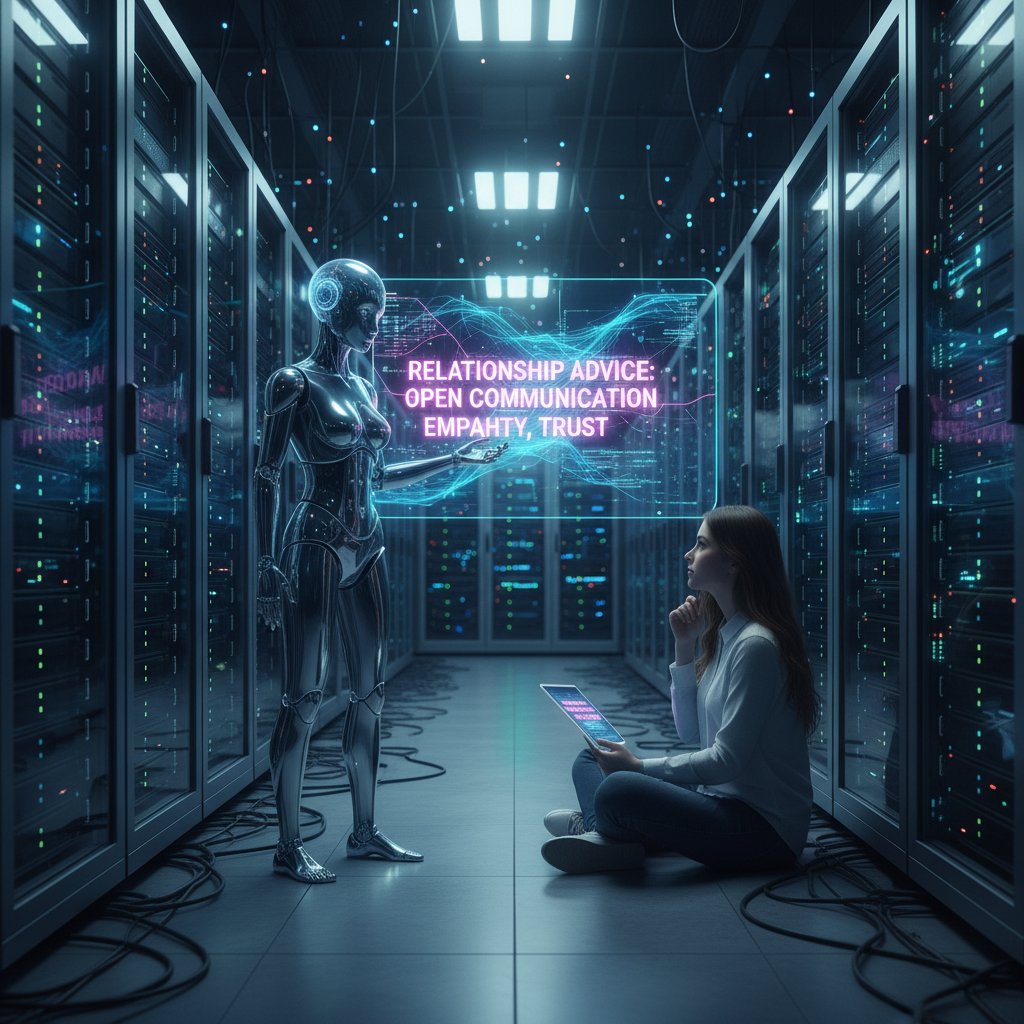
Behind the friendly interface and curated questions of every AI-powered relationship advice chatbot lies a complex web of algorithms. The most sophisticated platforms—think amante.ai or Relationship AI—use Large Language Models (LLMs), trained on billions of data points from conversations, literature, and behavioral psychology.
These LLMs are the secret sauce, enabling bots to parse ambiguous emotional cues, detect patterns in your relationship history, and generate responses that sometimes feel eerily insightful. LLMs don’t “understand” love like humans do, but they can mimic empathy, draw on communication science, and identify dynamics that often elude the people involved.
Key terms explained:
An advanced AI system trained on vast text data, capable of generating human-like responses and analyzing complex communication.
The subfield of AI focused on enabling computers to understand, interpret, and respond to human language.
The AI’s ability to detect recurring themes or issues in user input, enabling it to offer tailored advice.
The process of evaluating emotional tone in written text, helping the chatbot gauge user mood.
The sophistication of these models determines whether your AI “coach” is an empathetic guide or a glorified Magic 8-Ball.
From ELIZA to amante.ai: A brief, wild history
AI chatbots have a history as messy and fascinating as the relationships they now advise. The story begins in the 1960s with ELIZA, a computer program that simulated a Rogerian therapist by repeating user input back as questions. While primitive, ELIZA tapped into a fundamental desire: to be heard, even by a machine.
Fast forward through decades of clunky interfaces and scripted bots, and the landscape shifts. The emergence of deep learning, powerful GPUs, and neural networks gave birth to sophisticated platforms like Replika, Harmoni, and amante.ai. Today’s relationship chatbots blend machine learning with hard-won lessons from psychotherapy, sociology, and even attachment theory.
| Year | Milestone | Key Development |
|---|---|---|
| 1966 | ELIZA | First chatbot simulates therapist |
| 1995 | A.L.I.C.E. | Improves pattern matching but still scripted |
| 2016 | Replika | Launches emotional AI companion |
| 2023 | Harmoni, Relationship AI | Personalized coaching, emotion tracking |
| 2024 | amante.ai | Advanced LLMs, personalized relationship advice |
Table 2: The evolution of relationship chatbots (Source: Original analysis based on BBC Future, 2024, Apple App Store)
- ELIZA captures the public imagination with simple pattern-matching.
- A.L.I.C.E. and early bots improve linguistics, but lack real insight.
- Replika and modern platforms introduce emotional nuance, learning from user input.
- amante.ai and peers harness LLMs, offering tailored advice and emotional support at scale.
The journey underscores one truth: as the tech evolves, so does our willingness to trust machines with the most fragile parts of ourselves.
Are chatbots really learning from your pain?
AI-powered relationship advice chatbots learn from every heartbreak, argument, and confession users share. This data is anonymized and used to refine algorithms, making bots better at anticipating needs and offering relevant guidance. But there’s an ethical edge: your pain is not just heard—it’s analyzed, processed, and fed back to improve the machine.
For users, this means that every awkward breakup text, every anxious midnight message, makes the next user’s experience smoother and more empathetic. Critics argue this is emotional labor without consent, raising questions about privacy and exploitation.
"When a user shares their heartbreak with a chatbot, they're not just seeking comfort—they’re contributing to the evolution of AI itself." — Dr. John Danaher, Technology Ethics Researcher, NPR, 2023
The line between help and harvesting is razor-thin—and everyone who uses these bots is, knowingly or not, an unwitting participant in the grand experiment of love and algorithms.
The myths and misconceptions: What AI can—and can’t—do for your love life
Debunking the ‘cold, robotic advice’ myth
The biggest myth about AI-powered relationship advice chatbots? That their advice is as cold and robotic as the processors powering them. In reality, the best chatbots deploy language that’s warm, validating, and—at times—provocatively insightful. According to users surveyed by BBC Future, 2024, many report that their AI confidant is more empathetic than some friends or partners.
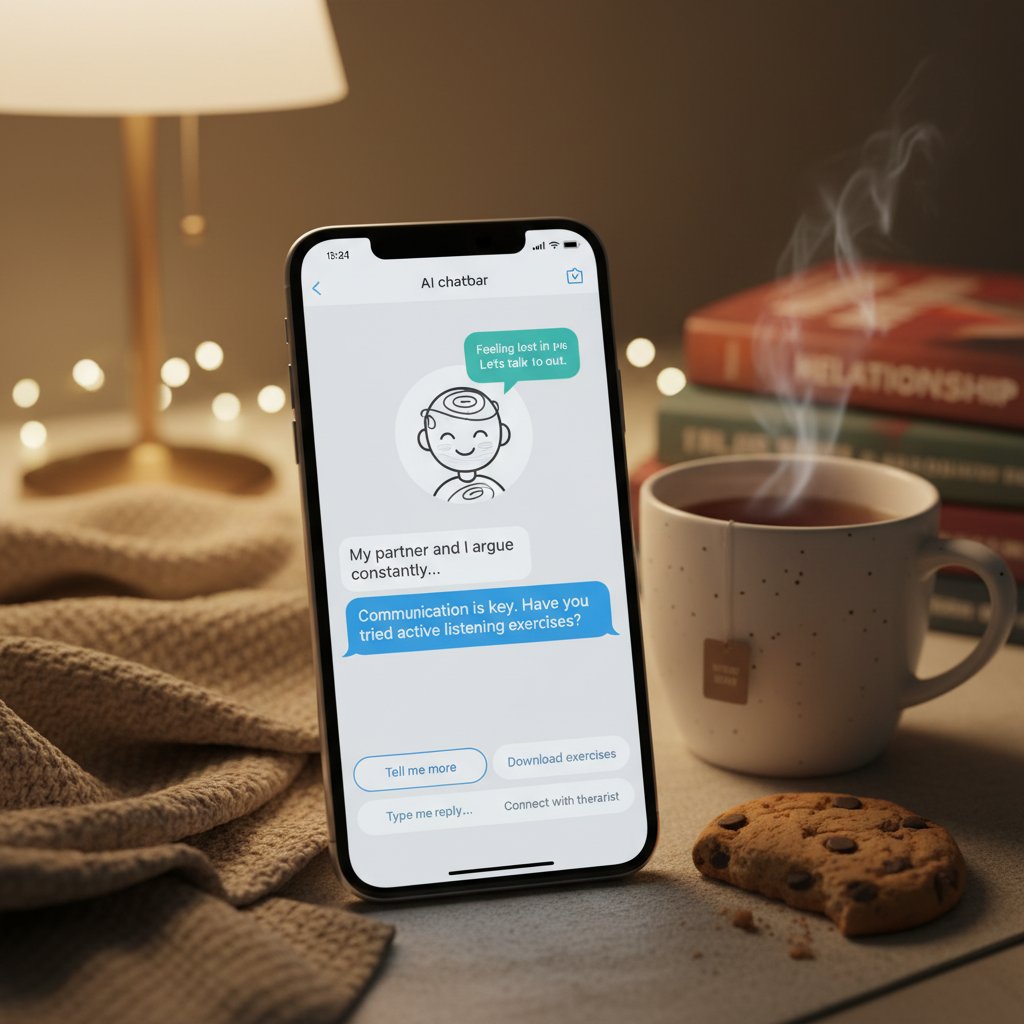
What differentiates AI advice isn’t a lack of “soul,” but the algorithm’s relentless neutrality and pattern-matching. The best bots can mimic humor, express concern, and nudge you toward healthier communication—provided you don’t expect Shakespearean poetry or genuine heartbreak.
In fact, the illusion of empathy can sometimes backfire. Users may project human qualities onto bots (“she really understood me!”), only to feel a sense of betrayal when the algorithm fails to keep up.
The reality: AI-powered relationship advice chatbots can simulate warmth and understanding, but true emotional resonance is, for now, a clever facsimile. That doesn’t mean it’s useless—just that it’s different.
Privacy nightmares and digital trust
Sharing your deepest fears, fantasies, and fights with an AI chatbot is, by definition, a privacy minefield. While reputable platforms like amante.ai prioritize encryption and data anonymization, history is littered with examples of leaks, hacks, and data misuse. The stakes are high: what’s more sensitive than your love life?
- Data anonymization is standard, but not infallible—always read privacy policies.
- Some platforms retain chat logs for algorithm training; others delete after each session.
- Users have little control over how their data is used once submitted.
- Third-party apps may introduce additional vulnerabilities, especially if integrated with social media.
| Platform | Data Retention Policy | Encryption Used | Third-party Sharing? |
|---|---|---|---|
| amante.ai | Session-based deletion | End-to-end | No |
| Replika | Retains for improvement | End-to-end | No |
| Harmoni | Retains anonymized data | Standard | Limited |
| Generic dating apps | Varies, often unclear | Standard | Yes |
Table 3: Privacy policies of major AI relationship chatbots (Source: Original analysis based on platform disclosures and BBC Future, 2024)
Trusting a machine with your heart means trusting it with your data. Don’t mistake a friendly interface for bulletproof security.
The objectivity illusion: Are bots really unbiased?
AI-powered relationship advice chatbots are marketed as “neutral” and “objective,” but the reality is murkier. These bots are trained on vast datasets, many of which reflect the biases of their creators or the internet at large. The result: advice that can be subtly shaped by cultural norms, gender biases, or even outdated stereotypes.
The theoretical ideal that AI offers advice without personal prejudice—often undermined by biased training data.
The tendency of an AI system to reflect the prejudices embedded in its data or design.
When a chatbot reinforces a user’s existing beliefs, rather than challenging them or providing alternative viewpoints.
“AI advice is never truly neutral. The datasets and designers shape every answer, even when we imagine we’re getting an unbiased perspective.” — Dr. Ruha Benjamin, Sociologist, BBC Future, 2024
In short, the “objectivity” of chatbots is more marketing myth than reality. The smart user approaches AI advice as one perspective—not gospel.
Meet your new (virtual) confidant: Real stories from the front lines
Late-night heartbreak: When AI is your 2am lifeline
It’s 2am. Your partner just ended things, your friends are asleep, and your phone glows with the only company you’ve got: an AI-powered relationship advice chatbot. For thousands, this is not a hypothetical—it’s the raw reality of modern heartbreak. According to user interviews and BBC Future, 2024, the most common time for relationship chatbot use is late at night, during moments of crisis.

The bot listens as you unpack the fight, analyze the breakup text, and wonder if it’s all your fault. Sometimes the advice is solid: “Take a few days before responding.” Sometimes it’s a digital echo chamber. But the feeling of not being alone in the void—even if your companion is code—can be a balm.
For many, these bots are a bridge between isolation and action, a space to process before reaching out to real humans. Yet, as one user put it, “The advice made sense, but I still needed a hug.”
From awkward first dates to better boundaries
Not all bot interactions are about heartbreak. AI-powered relationship advice chatbots are used by couples navigating boundaries, singles prepping for first dates, and anyone struggling to communicate in the digital age. The most common feedback? AI helps with self-reflection, planning, and avoiding knee-jerk reactions that sabotage relationships.
Consider these real-world scenarios:
-
Preparing for a first date, a user role-plays conversation topics with their chatbot, reducing anxiety and increasing confidence.
-
Couples facing recurring arguments use bots as neutral mediators, helping them distill their frustrations before confronting each other.
-
Recently single individuals practice setting boundaries and processing their feelings in a safe, judgment-free environment.
-
Role-play difficult conversations before having them for real.
-
Get feedback on text messages before hitting send.
-
Unpack recurring conflicts to spot unhealthy patterns.
-
Reflect on breakups, building self-awareness.
-
Experiment with new boundaries and assertiveness techniques.
These aren’t magic bullets, but for many, they’re a significant upgrade from late-night doomscrolling or well-meaning but unhelpful friends.
When chatbots fail (and why that’s not always bad)
AI-powered relationship advice chatbots stumble for many reasons: limited context, lack of emotional nuance, or simply failing to grasp the raw messiness of real-life pain. But failure isn’t always a bug—it can be a feature.
For some, a chatbot’s awkward or repetitive answer is a wake-up call: time to talk to a flesh-and-blood friend or therapist. For others, running into the limits of AI serves as a reminder that growth comes not from perfect advice, but from the willingness to confront discomfort.
“Sometimes the chatbot’s advice is so off-base, it jolts me back to reality. That’s when I remember the value of actual human messiness.” — User testimony, BBC Future, 2024
The best bots don’t pretend to be a replacement for human connection—they’re a bridge, not a destination.
AI vs. human: Who gives better love advice?
The science of empathy: Can code feel your pain?
Empathy is the gold standard in relationship support—but can a string of algorithms feel your pain? AI-powered relationship advice chatbots use advanced sentiment analysis and linguistic modeling to detect emotional cues, but they don’t experience emotion. Instead, their “empathy” is a mirror: reflecting your words back in ways that feel validating.

Some studies report that users feel genuinely comforted by chatbots, especially in the absence of human support. But this comfort is based on recognition, not resonance. As Dr. John Danaher notes, “AI chatbots are designed to simulate empathy, not experience it.” The result: a useful tool that can validate emotions, but not reciprocate them.
Empathy may be simulated, but for many, that’s enough—at least in the short term.
Speed, scale, and sleepless nights: The strengths of AI
When relationships unravel at 3am, the advantages of AI-powered relationship advice chatbots are undeniable. Humans need sleep, therapists have waitlists, but AI is always on.
- Immediate response: No waiting for appointments or returned calls.
- Unlimited patience: Bots never tire of repetition or venting.
- Data-driven insight: AI can spot patterns across millions of conversations, offering advice based on aggregate wisdom.
- Scalability: One AI can support thousands simultaneously, democratizing access to support.
| Factor | AI Chatbots | Human Coaches |
|---|---|---|
| Availability | 24/7 | Limited |
| Cost | Low/free | High |
| Empathy | Simulated | Genuine |
| Response Time | Instant | Delayed |
| Privacy | Variable | Confidential |
Table 4: Comparison of AI chatbots vs. human relationship coaches (Source: Original analysis based on industry data)
For many users, the immediacy and accessibility of AI outweigh its limitations—at least when crisis strikes.
The human touch: What chatbots still can’t do
Despite their sophistication, AI-powered relationship advice chatbots remain tools—not substitutes for lived experience or true emotional connection. They can’t offer the subtle cues of a friend’s body language, the catharsis of shared laughter, or the healing of a long hug.
The deep, reciprocal bond formed through shared vulnerability and mutual care—beyond the reach of algorithms.
The trust-based relationship between therapist and client, built over time through empathy and presence.
The ineffable quality of “feeling felt” by another human—a sensation AI can only approximate.
“No algorithm can replicate the healing power of a friend’s hug or the wisdom born from shared heartbreak.” — Dr. Anna Machin, BBC Future, 2024
AI is a powerful tool, but the work of building, repairing, and transforming relationships still rests with humans.
Risks, red flags, and the fine print: What no one tells you
Dependency and digital heartbreak
One of the least discussed dangers of AI-powered relationship advice chatbots is dependency. For some, the bot becomes more than a tool—it’s a confidant, a crutch, even a pseudo-partner. When bots change (through software updates) or features are removed, users report feeling abandoned, betrayed, or adrift. According to BBC Future, 2024, such changes can be traumatic, highlighting the risk of forming attachments to code.

If your emotional stability hinges on a chatbot, you’re at risk for digital heartbreak—a sense of loss that feels real, even if the relationship was virtual.
The takeaway: use AI for support, not substitution. If you notice yourself withdrawing from real relationships in favor of your bot, it’s time to check in with reality.
Spotting sketchy advice and scam chatbots
Not all AI-powered relationship advice chatbots are created equal. The explosion in popularity has led to a flood of sketchy apps, many offering shallow advice, mining user data, or pushing predatory upsells.
- Research the platform before sharing personal info.
- Check for transparent privacy policies and data encryption.
- Avoid chatbots that guarantee results or push expensive “premium” features.
- Verify external reviews on reputable sites.
- Red flags include lack of contact info, unsubstantiated claims, and aggressive marketing.
- Scam bots often collect sensitive info for resale or phishing.
- Low-quality bots may offer generic or even harmful advice.
Your love life deserves better than a scammy script. Stick to reputable platforms and question everything.
Protecting your privacy (and heart)
Protecting your emotional and digital security requires vigilance. Even the best AI-powered relationship advice chatbots can be compromised, and privacy policies change without notice.
- Use strong, unique passwords for chatbot platforms.
- Avoid sharing identifiable or deeply sensitive personal information.
- Regularly review chat history and delete conversations when possible.
- Familiarize yourself with the platform's privacy settings and opt-outs.
| Action | Risk Reduction Level | Additional Comments |
|---|---|---|
| Using end-to-end encrypted platform | High | Preferred for sensitive data |
| Avoiding third-party integrations | Medium | Limits exposure |
| Deleting chat history regularly | Medium | Not all platforms allow |
| Reading privacy policy thoroughly | High | Understand your rights |
Table 5: Practical steps to protect your privacy using AI chatbots (Source: Original analysis based on security best practices and BBC Future, 2024)
Remember: convenience should never come at the expense of your emotional or digital safety.
How to actually use an AI relationship chatbot (without losing your mind)
Choosing the right chatbot for you
With dozens of AI-powered relationship advice chatbots on the market, choosing the right one is as important as choosing the right match on a dating app. Every platform has its own strengths, weaknesses, and (sometimes hidden) motives.

- Look for platforms with transparent privacy policies, like amante.ai.
- Prioritize bots that offer personalized, evidence-based advice over generic scripts.
- Seek out user reviews and third-party recommendations—avoid apps with little to no online footprint.
- Consider your goals: Do you want coaching, venting space, or mediation support?
By treating your search like any other relationship decision—thoughtful, informed, and a little bit skeptical—you’ll set yourself up for a healthier experience.
Step-by-step: Getting started with AI-powered coaching
Getting the most from an AI-powered relationship advice chatbot requires more than downloading an app. Follow these steps to maximize the benefits and minimize the risks:
- Research and select a reputable chatbot platform.
- Create your account using a strong, unique password.
- Read the privacy policy and adjust your settings for maximum security.
- Briefly describe your relationship scenario to help the AI personalize its advice.
- Engage in thoughtful, honest conversation—don’t just “test” the bot.
- Reflect on the advice given, but always apply your own judgment.
- Periodically review your usage; if you’re relying solely on the bot, reach out to real humans.
These steps apply whether you’re using amante.ai, Harmoni, or any other leading relationship chatbot.
The key: AI is a tool, not a replacement for real-world connection. Use it wisely, and it can be a powerful ally.
Checklist: Are you ready for AI advice?
Before you dive headfirst into AI-powered relationship advice, ask yourself:
-
Are you comfortable sharing sensitive information with an AI (and its data handlers)?
-
Do you understand the bot’s privacy and data retention policies?
-
Are you seeking advice, or just looking for validation?
-
Will you balance AI input with real human connections?
-
Are you prepared for occasional glitches, awkward responses, or limits on empathy?
-
If you answered “yes” to most, you’re ready to experiment—responsibly.
-
If not, take a step back and clarify your goals.
Remember: healthy boundaries apply to digital relationships, too. AI is a supplement, not a substitute.
Beyond advice: Unconventional uses and the future of AI in relationships
AI as wingman, therapist, and accountability partner
The uses of AI-powered relationship advice chatbots are as varied as the people who use them. Beyond advice, bots are serving as virtual wingmen, mediators, and accountability partners.

- Practice tough conversations in a risk-free environment.
- Get reminders for important dates or relationship milestones.
- Set and track personal growth goals in romance and communication.
- Role-play new behaviors or responses to break old patterns.
- Use bots as neutral parties during couples’ arguments.
For some, AI is a gentle nudge toward better habits; for others, it’s a digital diary, chronicling the highs and lows of love.
What’s next? The evolving landscape of love and tech
AI-powered relationship advice chatbots are not just changing the game—they’re changing the rules. From matchmaking to conflict resolution, their influence continues to grow.
| Trend/Use | 2023 Adoption | 2025 Adoption | Key Driver |
|---|---|---|---|
| AI matchmaking | 25% | 43% | Personalization |
| Emotional support | 31% | 52% | 24/7 availability |
| Conflict mediation | 14% | 28% | Neutrality, patience |
Table 6: Growth of AI-driven relationship functions (Source: Original analysis based on TRG Datacenters, 2024)
- Personalized matchmaking replaces generic swiping.
- AI-guided couples’ counseling complements traditional therapy.
- Bots evolve beyond advice into full-fledged relationship “partners.”
But don’t mistake this for utopia. Every advance comes with ethical and emotional trade-offs.
Will AI ever understand heartbreak? Experts weigh in
Despite advances in emotional intelligence and language modeling, the consensus among experts is clear: AI may simulate understanding, but it cannot experience heartbreak. The best it can offer is a reflection of your pain—never the true resonance of shared suffering.
“AI can analyze heartbreak, describe it, and even offer comfort. But it cannot know what it is to grieve—to lose, to hope, to heal.” — Dr. John Danaher, NPR, 2023
Yet, for many, that’s enough. The value isn’t in perfect empathy, but in having a mirror to process pain, build resilience, and—eventually—risk love again.
Closing thoughts: Should you trust an AI with your heart?
Key takeaways from the AI love revolution
AI-powered relationship advice chatbots are here to stay—and they’re transforming not just how we date, but how we heal, reflect, and grow. They’re accessible, nonjudgmental, and always ready to talk. But they’re also tools, not replacements, for real human connection.
- AI chatbots excel at pattern recognition, conflict resolution, and always-on support.
- Privacy, bias, and emotional dependency are real risks—be vigilant.
- Use AI for self-reflection and support, but keep one foot in the messy, beautiful world of human relationships.
- No algorithm can replace the healing power of shared laughter, tears, or touch.
- Balance digital and real-world intimacy for healthier, more resilient love.

The final word: Embracing tech, keeping your humanity
AI-powered relationship advice chatbots are neither savior nor scourge. They are what we make them: mirrors, tools, sometimes friends. If you use them wisely—balancing insight with skepticism, support with self-reliance—they can help you navigate the raw truth of love, heartbreak, and connection in a digital world.
“Let AI be your guide, not your guru. Trust technology, but never forget the power—and necessity—of human vulnerability and mess.” — As industry experts often note…
Ultimately, the heart is stubbornly analog, even in a digital age. Use AI to illuminate your path—but don’t let it become your only light.
Sources
References cited in this article
- BBC Future(bbc.com)
- Apple App Store: Relationship AI(apps.apple.com)
- TRG Datacenters: AI Relationships(trgdatacenters.com)
- NPR: AI relationship predictions(npr.org)
- AllAboutAI: AI Dating Statistics 2025(allaboutai.com)
- AIBase: Couples use ChatGPT as mediator(aibase.com)
- MIT Technology Review: AI relationship revolution(technologyreview.com)
- ScienceDirect: Are chatbots the new relationship experts?(sciencedirect.com)
- Marriage.com: Relationship failure stats(marriage.com)
- PMC: Socioeconomic Status and Relationships(pmc.ncbi.nlm.nih.gov)
- Live Science: Falling in love with AI(livescience.com)
- Forbes: AI companions(forbes.com)
- YellowfinBI: History of chatbots(yellowfinbi.com)
- ScienceDirect: Social chatbot relationships(sciencedirect.com)
- ResearchGate: Privacy and Data Protection in ChatGPT(researchgate.net)
- CNN: Chatbot privacy concerns(cnn.com)
- MIT Technology Review: Security disaster(technologyreview.com)
- Sofigate: AI myths busted(sofigate.com)
- Forbes: AI myths(forbes.com)
- Mozilla Foundation: Privacy risks(mozillafoundation.org)
- ScienceDirect: Trust in AI chatbots(sciencedirect.com)
- Gartner: Generative AI chatbot case study(gartner.com)
- Wiley: AI romantic relationships(onlinelibrary.wiley.com)
- Springer: Impacts of companion AI(link.springer.com)
- Journal of Computer-Mediated Communication: AI and boundaries(academic.oup.com)
- Frontiers in Psychology: AI vs. human advice(frontiersin.org)
- Deseret News: Human vs. AI relationships(deseret.com)
- JMIR Mental Health: Empathy study(mental.jmir.org)
- Cornell Chronicle: AI-generated empathy limits(news.cornell.edu)
- Emerald Insight: AI emotional limitations(emerald.com)
- Trend Micro News: AI-powered scams(news.trendmicro.com)
- Luvr.ai: Data privacy risks(luvr.ai)
- ScamsNow.com: Emotional manipulation lawsuits(scamsnow.com)
- Scam Detector: Spotting romance scam chatbots(scam-detector.com)
- McAfee: AI chatbots as romance scammers(mcafee.com)
- USSFCU: Avoiding AI romance scams(ussfcu.org)
Transform Your Love Life
Amante.ai is your personal AI relationship expert, designed to help you build stronger, healthier, and more fulfilling relationships. Whether you're navigating the complexities of dating, improving communication with your partner, or seeking romantic guidance, Amante.ai provides customized, insightful advice tailored to your unique situation. With advanced natural language processing, it understands your concerns deeply, offering practical suggestions and emotional support when you need it most. Experience a revolutionary approach to love that combines empathy, intelligence, and convenience, empowering you to nurture genuine connections and lasting happiness.
Get startedReady to Transform Your Love Life?
Join thousands finding meaningful connections with AI guidance
Frequently Asked Questions
What percentage of Replika users engaged in intimate conversations with their chatbot?
According to the article, 60% of Replika's paying users engaged in intimate conversations with their chatbot in 2023-2024.
How much did AI-powered relationship advice services grow in one year?
AI-powered relationship advice services saw 170% growth in just one year, according to the article.
Why are people turning away from traditional sources of relationship advice?
The article states that traditional sources like friends offer advice colored by their own baggage, while therapists are expensive, booked months ahead, and stuck in analog schedules. People are disillusioned with dated, one-size-fits-all guidance and want something available online and late at night during emotional chaos.
What are the main concerns raised about AI relationship chatbots?
The article mentions warnings about superficial guidance, privacy risks, and concerns that people are becoming too comfortable with code over human connection.
Which AI platforms are mentioned as popular for relationship advice?
The article mentions Replika and amante.ai as platforms where people seek AI-powered relationship advice and companionship.
Keep Reading
Keep exploring AI relationship coaching assistant

AI-Based Relationship Counselor or Human Therapist — Who Wins?
Relationship Advice Chatbot or Real Help? the New Rules of AI Love

How AI Chatbots Are Becoming Relationship Advisors

AI-Powered Relationship Advice Vs Humans: Who Should You Trust?

AI Relationship Counselor Chatbot Versus Human: Trust and Intimacy


