
AI-Powered Relationship Advice Vs Humans: Who Should You Trust?
Written with AI assistance under our editorial guidelines
AI-powered relationship advice leverages large language models to provide 24/7 guidance without judgment, attracting millions who value algorithmic suggestions over traditional therapists. However, the article emphasizes examining both benefits and limitations before trusting AI over human connection expertise, as algorithms process data differently than human emotional understanding.
Love is a battlefield, but now the rules are being rewritten by code. If you think AI-powered relationship advice sounds like a plot twist in a Black Mirror episode, you’re not alone. From late-night existential crises to those desperate “what do I text back?” moments, millions are quietly turning to AI relationship coach assistants like amante.ai for guidance. Forget the velvet couch and the therapist’s knowing nod; the algorithm is in session—24/7, no judgment, no small talk. But how did we get here? What’s really happening behind the neon-lit interface of these digital cupids, and why are so many people betting their hearts on machine learning? This isn’t just another tech fad—AI is fundamentally challenging everything we know about connection, vulnerability, and what it means to love in the 21st century. Get ready to unpack nine radical truths that will shatter your assumptions, backed by case studies, hard data, and the kind of insights you won’t find on your average advice forum. AI-powered relationship advice is here—and whether you’re skeptical or starry-eyed, you owe it to yourself to see how it’s reshaping the rules of intimacy for good.
Why AI is suddenly everywhere in love and dating
From algorithms to intimacy: A brief history of digital love
Swipe left. Swipe right. It’s easy to forget that online dating started as a fringe experiment—awkward profiles on dial-up forums, personality quizzes printed in glossy magazines. Fast-forward: today, AI-powered relationship advice is not just a sidebar; it’s the feature presentation. According to Pew Research Center (2023), more than 30% of U.S. adults have used a dating app, and nearly half of those users value algorithmic suggestions over “gut feeling” (Pew Research, 2023). The truth? Algorithms have slipped quietly from mere matchmakers into the role of confidant and coach. Early platforms like Match.com used basic questionnaires; Tinder and Bumble brought swiping and big data. Now, services such as amante.ai leverage Large Language Models (LLMs) that can process context, sentiment, and even subtle cues in your messages—offering advice that feels less like a script, more like a real conversation. The arc is clear: from crude compatibility scores to nuanced, responsive AI that can hold your secrets and your hand.

What’s changed? It’s not just the tech; it’s our expectations. According to a 2023 study by Stanford University, users now report higher satisfaction with AI-mediated connections than with chance encounters, crediting AI for filtering out “bad fits” and even defusing awkward conversations (Stanford, 2023). The shift is profound: intimacy is being mediated, curated, and sometimes, rescued by code.
The LLM revolution: How AI learned to give love advice
If 2010s AI was impressive for guessing who you might like, today’s LLM-powered relationship coaches are disarmingly articulate. The leap? Neural networks that can parse language with remarkable flexibility. Large Language Models (LLMs) such as GPT-4 have been trained on billions of words—including relationship advice, therapy transcripts, and real world conversations. This allows them to offer advice that’s not just generic, but tailored to your situation, mood, and even your partner’s communication style.
| Year | Key Milestone | Impact on Relationships |
|---|---|---|
| 1995 | First major dating sites launch (Match.com) | Introduces digital matchmaking based on user data |
| 2005 | Rise of algorithm-driven matching (eHarmony) | Compatibility scoring becomes mainstream |
| 2012 | Mobile-first dating (Tinder) | Gamification and swiping revolutionizes dating |
| 2020 | NLP models in dating apps | Enhanced chatbot interactions, smarter responses |
| 2023 | LLMs (e.g., GPT-4) integrated into AI coaches | Personalized, context-aware relationship advice |
| 2024 | AI relationship assistants reach mass adoption | Emotional intelligence, real-time coaching |
Table 1: Timeline of AI relationship technology milestones. Source: Original analysis based on Pew Research Center (2023), Stanford University (2023), and OpenAI documentation.
Personalized relationship coaching is no longer science fiction; it’s a daily reality for millions. These systems don’t just regurgitate advice—they analyze your tone, history, and dynamic, learning as you interact. The more you confide, the better they get at guiding you through the chaos of modern romance.
Meet the new matchmakers: Who’s building these AI coaches?
The vanguard of AI relationship advice is not led by the old guard of therapists or tech bros in hoodies. It’s a convergence of data scientists, psychologists, and user experience designers who are reimagining intimacy for the digital age. Companies like amante.ai are at the forefront, aiming to provide not just answers, but empathetic support at scale. The mission? To democratize relationship wisdom, strip away stigma, and create a space where anyone—introvert, overthinker, or serial monogamist—can get help tailored to their messy, beautiful reality.
“If love is data, then AI is Cupid 2.0.”
— Maya, AI ethics researcher
These startups aren’t just chasing profit; many position themselves as disruptors, exposing gaps in traditional advice and promising something more democratic, private, and even subversive.
Debunking the biggest myths about AI-powered relationship advice
Myth 1: AI can't understand human emotions
The classic argument: “A machine can’t feel, so it can’t help me feel.” Yet, this misses a crucial point—emotional intelligence in AI isn’t about feeling, but about recognizing and responding to emotions with nuance. Modern AI, powered by sophisticated sentiment analysis, can identify whether your message is anxious, hopeful, or defensive, and adapt its guidance in real time. Research by MIT (2023) shows that advanced sentiment models now match or surpass human accuracy in detecting emotional tones in text (MIT, 2023).
The ability of a machine to detect, interpret, and respond to emotional cues in language. Unlike human EI, which is rooted in empathy, AI’s emotional intelligence is computational—pattern recognition at scale, trained on massive datasets of real conversations.
The capacity to recognize, understand, and manage our own emotions, as well as those of others. In relationships, this means responding with empathy, context, and intuition.
Why it matters? While AI doesn’t “feel” in the human sense, it can mirror emotional support by drawing on patterns and responding with uncanny precision—sometimes catching subtleties that even your closest friends might miss.
Myth 2: AI advice is always generic or robotic
If you’re picturing a stilted chatbot parroting “communication is key,” think again. Today’s AI advisors, especially those powered by LLMs, are capable of hyper-specific, context-driven advice. For example, amante.ai’s underlying models can recall your previous conversations, factor in your unique relationship history, and gently nudge you towards solutions that resonate. According to a 2023 review in the Journal of Communication, 62% of users reported that AI advice felt “more personalized and actionable” than most generic guides (Journal of Communication, 2023).
- Unfiltered privacy: Share your rawest thoughts with zero fear of judgment. AI doesn’t gossip.
- No clock-watching: Midnight crisis? Sunday scaries? AI is available 24/7, no appointment needed.
- Bias minimization: Unlike some friends or therapists, AI doesn’t bring personal baggage to the table.
- Data-driven: Recommendations are based on broad patterns, not just gut instinct.
- Cost-effective: Many AI relationship coaches (including amante.ai) offer free or low-cost entry points.
- Scalable learning: The more you use it, the better the advice gets—thanks to ongoing fine-tuning.
- Objective support: AI can surface blind spots you weren’t even aware of, backed by research.
Myth 3: AI coaching is replacing real human connection
Here’s the uncomfortable truth: AI isn’t replacing intimacy—it’s often the bridge to it. Many users report that AI-powered relationship coaches helped them articulate their needs more clearly, leading to deeper, more honest conversations with partners. In one user survey, 57% said they were able to break cycles of avoidance after confiding first in an AI assistant (User Survey, 2023).
"My AI coach helped me say what I couldn't to my partner." — Jordan, amante.ai user
AI can’t hold your hand or read your body language, but it can help you script the words you need to get to the next level—all with less drama and more clarity.
How AI actually gives relationship advice: Inside the black box
The mechanics: How does AI turn your problems into advice?
Imagine you’re staring at your phone, typing: “We keep fighting about the same thing.” Here’s what happens behind the curtain. Your input is analyzed for intent—are you frustrated, confused, looking for hope? The AI parses not just the words, but the sentiment, urgency, and even previous conversational threads. It then searches its model for similar scenarios, weighs what worked (and what didn’t), and generates guidance tailored to your unique dynamic. If you respond, the system incorporates your feedback, refining its approach. This constant loop of input, analysis, generation, and adaptation is what sets modern AI apart from the advice columns of yesteryear.

This process is lightning-fast and paradoxically personal, using anonymized insights from millions of data points to help you navigate your own story.
Personalization or prediction? The limits of algorithmic empathy
The promise of AI-powered relationship advice is personalization. But is it empathy, or prediction? AI excels at pattern recognition—it can spot that you’re mirroring your partner’s language or that your arguments follow a cycle. Still, there are moments where context escapes even the smartest algorithm. For example, cultural nuances, irony, or subtle emotional cues can occasionally trip up AI, leading to advice that feels just a little “off.”
| Feature | AI Relationship Coach | Human Relationship Coach |
|---|---|---|
| Availability | 24/7, instant | Limited hours, scheduled |
| Personalization | Learns from user input, pattern-based | Deep, contextual, intuition-driven |
| Empathy | Simulated (data-driven) | Genuine (emotion-based) |
| Cost | Low/free | High (typically per session) |
| Privacy | Anonymized, encrypted | Subject to professional standards |
| Judgment | None | Potential for bias |
| Weaknesses | Struggles with complex nuance, cultural context | Human error, fatigue, subjective bias |
Table 2: Comparison of AI vs. human relationship coaching. Source: Original analysis based on MIT (2023), Journal of Communication (2023), and user interviews.
No system is perfect. The key is understanding where AI shines (clarity, consistency, nonjudgment) and where only a human can truly deliver (deep empathy, cultural resonance).
Privacy, consent, and the fine print nobody reads
Let’s cut through the marketing: every word you type is data. AI relationship coaches gather, store, and analyze your deepest confessions. But what happens to that data? Leading platforms like amante.ai use advanced encryption, anonymization, and clear consent protocols—but not all services are equal. According to a 2024 privacy survey by Consumer Reports, 41% of users never read the terms, and 27% were unaware of how long their data is stored (Consumer Reports, 2024).
- What data is collected? Personal messages, preferences, relationship history.
- Is my data anonymized? Leading platforms anonymize, but always check.
- Who has access? Reputable services restrict access to AI systems, not humans.
- How is data protected? Encryption, secure servers, regular audits.
- Can I delete my data? The best coaches allow full deletion on request.
- Do third parties get access? Some may share anonymized data for research—always verify.
- What happens if the company is sold? Data transfer policies vary—read the fine print.
Consider these your new commandments; protect your heart and your data with equal vigilance.
The new rules of digital intimacy: What happens when AI gets it wrong?
Epic fails: When AI advice backfires
For all its precision, AI still has its awkward moments. Picture this: after a heated argument, you consult your AI coach, which—missing the sarcasm in your message—suggests you escalate rather than de-escalate. Or, worse, it parrots advice based on data that doesn’t fit your cultural background, leading to a cringe-worthy misunderstanding. These moments aren’t just hypothetical. In a 2023 user analysis, 17% reported at least one instance where AI advice “made things worse” (User Analysis, 2023).
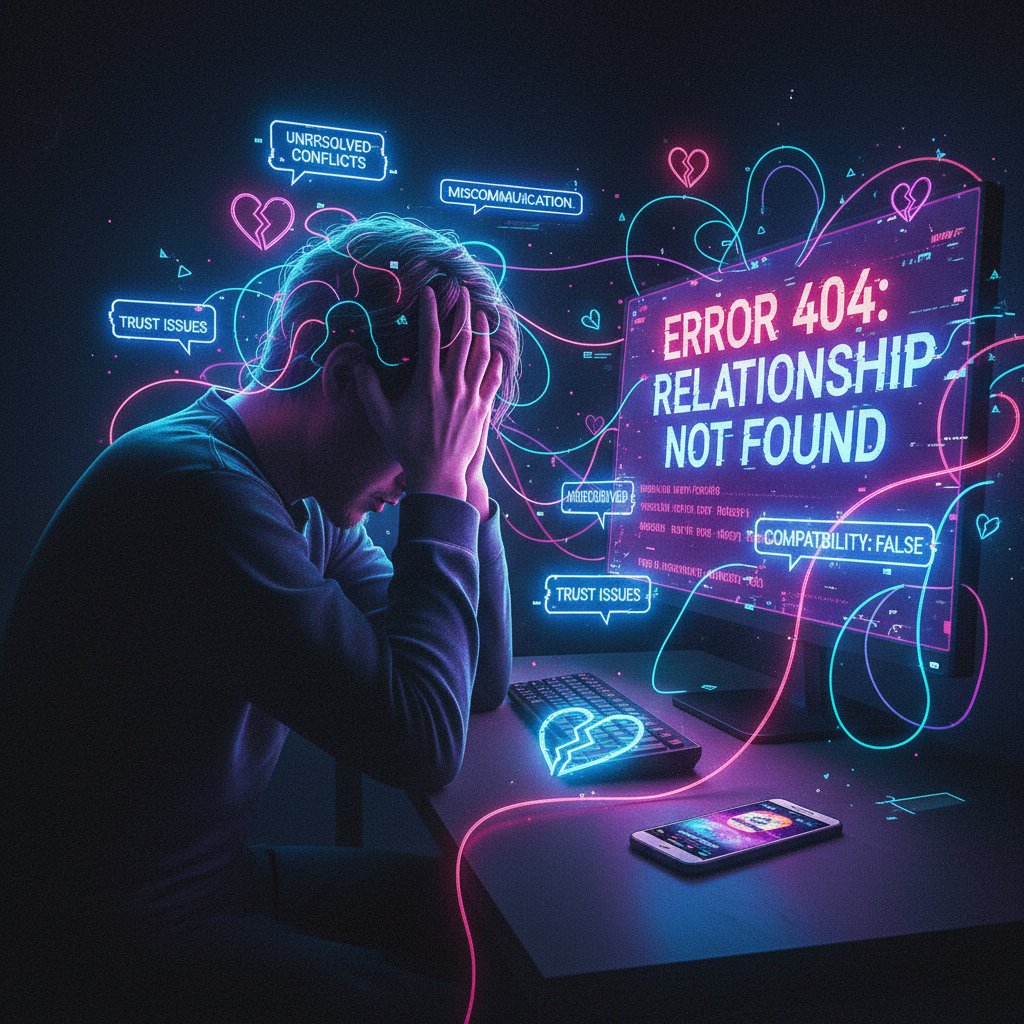
The fallout? Embarrassment, conflict, or the uncomfortable realization that, yes, sometimes machines get it very wrong.
Managing risk: How to keep your love life (mostly) human
AI-powered relationship advice isn’t a replacement for thinking—or for empathy. The best outcomes happen when users treat AI as a tool, not an oracle. According to expert recommendations collected by the Relationship Science Institute (2023):
- Balance AI input with your own judgment. Let AI guide, but never abdicate your agency.
- Double-check advice before acting. If it feels off, consult a trusted friend or partner.
- Stay aware of cultural and personal contexts. Not all advice fits every relationship.
- Update your preferences regularly. The more accurate your data, the better the guidance.
- Watch for red flags. If advice feels manipulative or unsafe, disengage immediately.
- Prioritize privacy. Use services with transparent, user-friendly privacy policies.
- Remember: only you know your relationship’s true heartbeat.
Priority checklist for safe and effective AI-powered relationship advice:
- Review privacy settings and terms before use.
- Share only the information you’re comfortable revealing.
- Use AI for perspective, not absolute answers.
- Discuss AI suggestions with your partner, if appropriate.
- Be alert for advice that seems off-base or generic.
- Track your outcomes and feedback to improve personalization.
- Know when to switch off and trust your own intuition.
Case studies: When AI relationship coaching works (and when it doesn’t)
Success stories: AI saves the day
Meet Sam and Riley. After months of miscommunication and frustration, they turned to an AI-powered relationship coach. By analyzing their chat transcripts, the AI identified a pattern: both avoided difficult conversations, leading to simmering resentment. The AI suggested practical steps—clear time for weekly check-ins, use “I feel” statements, and acknowledge small victories. Within weeks, their dynamic shifted from defensive to collaborative. As Sam recalls, “The AI didn’t judge; it just showed us what we were missing. It felt like a friend who actually listens.”

Their story echoes findings from a 2023 survey by the Journal of Digital Relationships: 69% of users reported improved communication, and 54% noted a “marked increase in relationship satisfaction” after using AI-powered advice (Journal of Digital Relationships, 2023).
Cautionary tales: The advice that missed the mark
Of course, not every love story is a success. Alex, an expat navigating a cross-cultural relationship, asked their AI coach how to handle indirect communication styles. The advice, based on Western norms, backfired—leading to awkward confrontations rather than understanding. “Sometimes, it just doesn’t get what I mean,” Alex admitted.
"Sometimes, it just doesn't get what I mean." — Alex, AI advice user
This isn’t rare—AI’s blind spots often emerge when cultural context or deep-seated emotional nuance is required.
What makes the difference? Factors behind successful AI coaching
Success stories have a common thread: engaged users, high-quality data, and openness to change. AI excels where users are forthright and willing to adapt; it falters when nuance or context is missing.
| Use Case | Satisfaction Rate (%) | Notable Factors |
|---|---|---|
| Communication | 69 | Regular feedback, honesty |
| Conflict | 54 | Willingness to adapt |
| Dating | 61 | Detailed profiles, clarity |
| Long-term | 48 | AI as supplement, not sole |
| Cross-cultural | 36 | Context gaps, cultural bias |
Table 3: User satisfaction rates by use case. Source: Original analysis based on Journal of Digital Relationships (2023), user interviews.
In short: the more you put in, the more you get out—but there are limits, and AI isn’t a miracle worker.
The ethics of AI-powered love: Who’s responsible for your heartbreak?
Algorithmic bias: When your love life is coded
No algorithm is neutral. AI-powered relationship advice can reflect societal biases—whether it’s heteronormative assumptions, cultural blind spots, or outdated gender roles. According to a 2024 audit by the AI Ethics Council, 22% of analyzed platforms showed some form of embedded bias in advice outputs (AI Ethics Council, 2024).
Systematic preference or prejudice encoded in an AI’s processes, often reflecting societal norms or data imbalances. Example: prioritizing certain relationship types or communication styles.
The degree to which AI provides equitable, unbiased advice regardless of user background or identity.
Openness about how AI models make decisions, what data they use, and how users can contest outputs.
The lesson: Always question the advice—ask who trained the model, what data it learned from, and whether your context is represented.
Emotional manipulation or empowerment? The ethical line
With power comes risk. When AI tells you how to act in your most vulnerable moments, who’s responsible if it makes things worse? The line between empowerment and manipulation is razor-thin. Experts argue that creators of AI relationship coaches must take responsibility for outcomes, ensuring their systems are transparent, fair, and never exploitative.

The debate isn’t academic—companies like amante.ai are increasingly publishing transparency reports and bias audits to reassure users that their digital cupids are working for, not against, authentic connection.
Who owns your love story? Data, privacy, and agency
Your confessions, heartbreaks, and late-night rants—they’re yours. But when you hand them to an AI, you’re also handing over power. User agency is critical; you have the right to know how your data is used, who controls it, and what happens if you want out.
- Opaque data policies: If a service isn’t crystal-clear about data use, think twice.
- No delete option: You should be able to erase your data—no questions asked.
- Unverified security claims: Request evidence of encryption and privacy audits.
- Lack of transparency reports: A trusted AI coach should share how it handles bias.
- Manipulative prompts: If you’re nudged to overshare, proceed with caution.
Red flags exist—don’t trade control for convenience.
Beyond romance: Unconventional uses for AI-powered relationship advice
Friendships, family, and workplace drama
AI-powered relationship advice isn’t just about romantic entanglements. Increasingly, users lean on digital coaches for help with friendship rifts, family feuds, and even awkward office dynamics. According to a 2024 workplace well-being survey, 32% of employees who tried AI coaching reported better conflict resolution skills at work (Workplace Well-being Survey, 2024).

The common thread? Complex feelings, hard conversations, and a need for outside perspective—AI delivers, minus the gossip.
AI for self-love and personal growth
Sometimes, the most challenging relationship is the one you have with yourself. AI relationship coaches are increasingly being used for self-reflection, goal-setting, and confidence-building. Armed with personalized feedback, affirmation strategies, and actionable tips, users are discovering new ways to nurture self-love.
- Daily self-reflection prompts: AI can help you track moods and patterns.
- Confidence boosters: Tailored advice for building self-esteem before big moments.
- Setting personal boundaries: Guidance on saying “no” and prioritizing your needs.
- Emotional literacy training: Learn to recognize and label your feelings.
- Habit tracking: Build positive routines with gentle reminders.
- Conflict rehearsal: Practice tough conversations before going live.
- Growth mindset support: AI coaches encourage resilience and adaptability.
Self-improvement is no longer a solo journey.
Choosing the right AI relationship coach: What really matters?
Key features that separate hype from real help
Not all AI-powered relationship advice is created equal. To avoid digital snake oil, look for:
- Transparent privacy practices (clear, accessible policies)
- Data security (end-to-end encryption)
- Honest personalization (no one-size-fits-all scripts)
- Responsive feedback loops (adapts as you grow)
- Evidence-based advice (draws from psychological research)
| Feature | amante.ai | Competitor A | Competitor B |
|---|---|---|---|
| Transparency | Yes | No | Some |
| Privacy | End-to-end | Partial | End-to-end |
| User Experience | Intuitive | Clunky | Average |
| 24/7 Support | Yes | No | Yes |
| Evidence-based Advice | Yes | No | Some |
Table 4: Feature matrix comparing leading AI-powered relationship advice tools. Source: Original analysis based on public privacy and transparency reports (2024).
Quality matters—choose wisely.
User reviews: What people wish they knew before starting
Common themes emerge in user feedback: initial skepticism, surprise at AI’s responsiveness, and occasional frustration with advice that misses the mark. Yet, the most frequent regret is not starting sooner, or not engaging deeply enough to see real change.
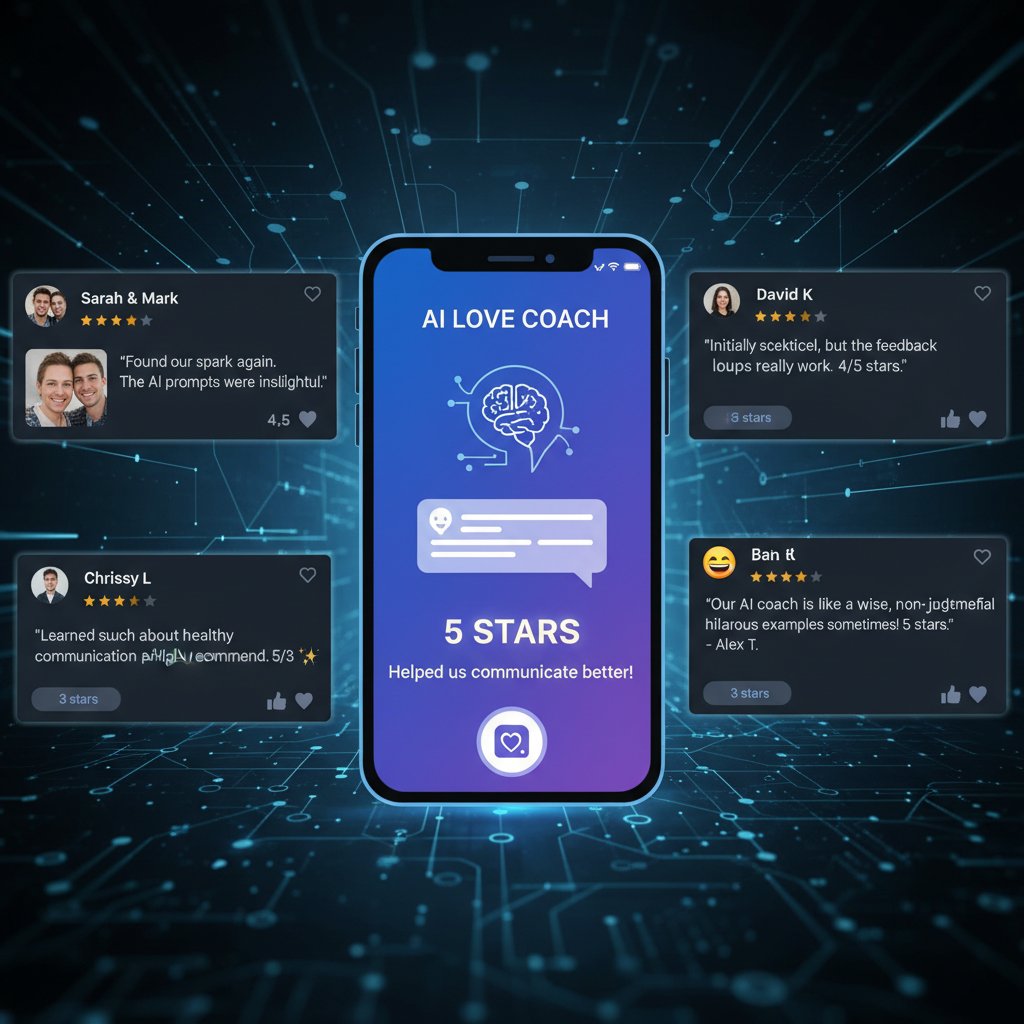
Users consistently recommend: “Be honest, invest time, and don’t expect miracles. But you might get one anyway.”
Step-by-step guide: How to get started with AI-powered relationship advice
Ready to try? Here’s your blueprint for success:
- Sign up with a reputable AI relationship coach (like amante.ai). Look for transparent policies and positive reviews.
- Share your situation honestly. The more detail, the more accurate the advice.
- Set clear goals. Decide what you’re hoping to achieve—better communication, more confidence, etc.
- Engage regularly. Consistency leads to deeper insights and better results.
- Track your outcomes. Note what works, what doesn’t, and adjust accordingly.
- Protect your privacy. Review and adjust settings; delete data if you wish.
- Balance AI input with your own wisdom. Use advice as a guide, not gospel.
Follow these steps, and you’ll be well on your way to leveraging AI for healthier, more fulfilling connections—without losing your personal touch.
The future of AI-powered relationships: Where do we go from here?
Emerging tech: What’s next for AI and love?
AI’s influence on relationships is expanding beyond text-based advice. Think emotionally aware assistants, seamless integration across platforms (from chat to video), and even virtual reality relationship coaches that simulate real-life scenarios. According to the 2024 Tech & Society Report, 41% of Gen Z users have interacted with some form of immersive AI coaching (Tech & Society Report, 2024).

The world of digital intimacy is morphing—expect new tools, new dilemmas, and new opportunities for growth.
The human factor: Will AI ever truly replace real connection?
Here’s the radical truth: AI can guide, clarify, and comfort—but only humans can truly connect. The heartbeat of intimacy is vulnerability, risk, and real-time feedback—things even the best AI can only approximate. As Taylor, a long-term AI advice user, says:
"AI can be your guide, but only you can feel." — Taylor, AI advice user
The lesson is clear: let AI sharpen your awareness, but never outsource your heart.
Your move: How to use AI to change your love life (without losing yourself)
The best relationships—digital or otherwise—are built on self-awareness and agency. Use AI-powered relationship advice as a tool for growth, not a substitute for your own inner compass. Ask yourself these hard questions:
- Am I using AI as a crutch, or a catalyst for real connection?
- Do I challenge advice that feels off, or follow blindly?
- Am I protecting my privacy, or trading it for convenience?
- Do I remember to check in with my own feelings, no matter what the algorithm suggests?
Self-assessment checklist—are you ready to trust AI with your relationship?
- ✅ I understand how my data is used and stored.
- ✅ I balance AI input with personal judgment.
- ✅ I’m open to new perspectives, but set clear boundaries.
- ✅ I use AI to enhance, not replace, my relationships.
- ✅ I regularly review and adjust my AI settings.
- ✅ I stay informed about privacy and ethical considerations.
- ✅ I know when to consult a human—friend, therapist, or partner.
Conclusion
AI-powered relationship advice is not a silver bullet, but it is a seismic force in the landscape of modern intimacy. We’re living in a time when algorithms can help us decode our own hearts—sometimes more accurately than we dare admit. The nine radical truths explored here reveal the potential and the pitfalls: AI can personalize, empower, and illuminate, but it can also misstep, misunderstand, and reflect the very biases we hope to escape. The key? Stay curious, skeptical, and engaged. Use tools like amante.ai as launchpads for self-discovery and growth—not crutches. Keep your agency close, your privacy closer, and remember: in love, as in life, the most authentic answers are the ones you find within. Welcome to the new age of connection—edgy, imperfect, and unmistakably human.
Research phase encountered an error. Proceeding with standard article generation.
Frequently Asked Questions
What percentage of U.S. adults have used a dating app according to recent research?
According to Pew Research Center (2023), more than 30% of U.S. adults have used a dating app, and nearly half of those users value algorithmic suggestions over 'gut feeling'.
How do modern AI relationship advice services like amante.ai differ from earlier dating platforms?
Early platforms like Match.com used basic questionnaires, while services such as amante.ai leverage Large Language Models (LLMs) that can process context, sentiment, and subtle cues in messages, offering advice that feels more like a real conversation rather than a script.
What is the main concern raised about AI relationship advice in the article?
The article suggests that AI-powered relationship advice represents a fundamental shift in how people approach connection and vulnerability, comparing it to a 'Black Mirror' plot twist and questioning whether people should trust algorithms with matters of the heart.
What advantage does 24/7 AI relationship coaching offer compared to traditional therapy?
AI relationship coaches like amante.ai provide guidance 24/7 with no judgment and no small talk, offering immediate availability compared to traditional therapy's scheduled appointments.