

How to Improve Self-Confidence in Dating in a World Built on Doubt
Written with AI assistance under our editorial guidelines
Building genuine dating confidence requires recognizing how dating apps and media profit from your insecurity while actively undermining authentic self-worth. Rather than pursuing industry-marketed solutions, reclaiming agency means seeing through manipulative systems, embracing your authentic self, and understanding that shaky confidence results from structural design rather than personal failure.
It’s 2025. If you’re single and scrolling, chances are your thumb’s gotten more exercise than your self-confidence lately. The endless cycle of swipes, unread DMs, and ghosted matches isn’t just a nuisance—it’s an entire architecture engineered to keep you doubting yourself. The search for how to improve self-confidence in dating isn’t about becoming someone you’re not. It’s about raging against a system designed to keep you small, reclaiming agency, and daring to own your story. In this in-depth feature, we unmask the industries and cultural scripts that profit from your insecurity, bust the myths that keep you stuck, and serve up evidence-based, hard-won strategies for building real, unbreakable confidence. Your dating life is about to get a lot less passive—and a lot more authentic.
Why your confidence in dating is broken (and who profits from it)
The anxiety economy: how insecurity became big business
For decades, dating insecurity was a private affair—shared with close friends or scribbled in journals. Fast forward to today, and it’s the backbone of a multibillion-dollar market. The "anxiety economy" thrives on your discomfort, selling everything from swipe boosts to confidence workshops. According to Bumble, 2025, 41% of singles now feel more confident when they embrace their authentic selves, but the industry isn’t built to encourage that kind of growth. Instead, it monetizes the very doubts it claims to solve. Most people don’t realize confidence is systematically undermined for profit. The mechanisms are slick—endless notifications, curated “success stories,” algorithmic matches that dangle hope but rarely deliver substance.

"Most people don’t realize confidence is systematically undermined for profit." — Jordan, digital culture analyst
If your confidence feels shaky, it’s not a personal failing. It’s the predictable outcome of a system invested in keeping you insecure and engaged. The sooner you see through the game, the faster you can reclaim your agency.
How media and culture script your self-doubt
Mainstream media, from blockbuster rom-coms to binge-worthy TV, has always peddled a very particular brand of dating confidence—one that’s mostly unattainable, heteronormative, and rooted in fantasy. Meanwhile, social media amplifies this mythology, serving up endless highlight reels and “perfect” love stories. The result? A generation gaslighted into believing that if you’re not effortlessly witty, attractive, and always “on,” you’re doing it wrong.
| Cultural message | Real impact | Modern view |
|---|---|---|
| “Confidence is natural or you’re doomed” | Fuels chronic self-doubt and self-comparison | Confidence can be built, not inherited |
| “Grand gestures win hearts” | Feeds performance anxiety | Small, authentic acts have deeper impact |
| “Male confidence = dominance” | Encourages toxic masculinity | Positive masculinity is vulnerable and self-aware |
| “Only certain bodies are desirable” | Triggers body image issues and exclusion | Desire is diverse; attraction is subjective |
| “Being single = failure” | Stigmatizes independence | Singlehood is a valid, empowering choice |
Table 1: Dating confidence in pop culture—myth vs. reality
Source: Original analysis based on Bumble, 2025, Forbes Health, 2025
The real impact runs deeper than FOMO. These scripts hardwire self-doubt, making it harder to trust your gut or pursue what genuinely excites you. The modern antidote? Deconstruct the narrative, question the script, and reclaim the right to define dating success on your own terms.
The confidence gap: who benefits when you feel small?
Low self-esteem isn’t just a personal struggle; it’s a goldmine for entire industries. Personal branding “gurus,” cosmetic companies, and self-help programs all profit from your search for validation. Dating apps, in particular, have mastered the art of leveraging insecurity for engagement. According to the Lovie Awards, 2024, 45% of Tinder users admit to using the app for a confidence boost rather than genuine connection—a dynamic that keeps you coming back for another hit of digital dopamine.
- Dating apps that profit from endless scrolling and micro-validations.
- Cosmetic and beauty brands pushing unattainable ideals.
- Influencer-marketing juggernauts selling “confidence cures.”
- Publishers of self-help books capitalizing on chronic dissatisfaction.
- Social media platforms amplifying insecurity through comparison.
- Wellness gurus monetizing the illusion of “quick fixes.”
Recognizing these hidden beneficiaries isn’t about blaming, but about understanding the feedback loop you’re locked in. Only then can you start deciding whose voice to trust—and whose to mute.
Debunking the myths: what 'confidence' in dating really means
Confidence versus arrogance: why most advice gets it wrong
Conventional dating advice is a minefield. Too often, “confidence” gets conflated with arrogance—loudness, bravado, or even callousness. In reality, genuine dating confidence is quieter, more nuanced, and rooted in self-acceptance.
A grounded belief in your worth, even when you’re nervous or imperfect. It’s about showing up—awkward silences, quirks, and all—without apology.
Fragile bravado masked as certainty. It’s performative, loud, and often dismissive of others’ boundaries and feelings.
The art of aligning your dating persona with your real self, even when it’s uncomfortable. Not static—true authenticity includes openness to change and growth.
Popular media consistently misrepresents these concepts, glamorizing the “bad boy” or “cool girl” archetype while erasing the messy, human side of real connection. The result? Well-intentioned daters mimic personas that win screen time, not hearts.
The 'just be yourself' lie—decoded
You’ve heard it a thousand times: “Just be yourself.” But what if “yourself” is stuck in self-doubt or hasn’t learned better? Blind authenticity, without growth, can be a trap. In the words of Alex, a contrarian dating coach:
"Being yourself without growth is a trap."
— Alex, dating coach
Instead of clinging to an unexamined version of self, embrace curiosity and evolution. Seek out perspectives that challenge you. As research from eharmony, 2025 shows, up to 30% of online daters get friends’ help with profiles—evidence that growing through others’ feedback is not only normal, but strategic.
Why 'fake it till you make it' can backfire
The “fake it till you make it” mantra sounds empowering. In practice, it often wears thin—fast. Inauthentic confidence can feel like wearing a mask at a masquerade: exhilarating for a moment, exhausting in the long run. Extensive psychological research warns of the emotional toll when your external persona doesn’t match your inner reality.
| Approach | Short-term result | Long-term effect | Emotional toll |
|---|---|---|---|
| Authentic confidence | Discomfort → growth | Resilient self-worth | Occasional vulnerability |
| Performative confidence | Quick attention boost | Burnout, identity confusion | Anxiety, imposter syndrome |
Table 2: Outcomes of authentic vs. performative confidence
Source: Original analysis based on Jobera, 2025, Forbes Health, 2025

The real flex? Owning your insecurities and still showing up—mask off.
The science behind self-confidence: what works (and what doesn’t)
How your brain rewires itself for (or against) dating success
Confidence isn’t a fixed trait; it’s a network of neural patterns, chiseled by experience and repetition. Neuroplasticity—the brain’s ability to rewire itself—means you’re not stuck with what you’ve got. According to Jobera, 2025, 80% of young daters actively prioritize self-care, a habit shown to strengthen self-assurance by reinforcing positive neural pathways.
Practical brain-training exercises include intentional exposure to feared situations, journaling after dates, and re-framing rejection as information—not indictment. These micro-changes gradually build a mental architecture that resists collapse under pressure.
- Name your fears: Labeling anxiety reduces its hold.
- Practice micro-exposures: Start with low-stakes interactions and build.
- Ritualize reflection: Debrief after each date—what went well?
- Celebrate small wins: Positive reinforcement changes brain chemistry.
- Limit negative inputs: Curate your social and media diet.
Each habit deposits confidence “currency” into your neural bank account. The payoff? You’re more likely to bounce back from setbacks and pursue connections that matter.
The self-talk revolution: hacking your inner critic
The voice in your head can be your greatest ally or harshest saboteur. Cognitive behavioral techniques (CBT) have proven especially effective for dating-related anxiety, teaching you to challenge distorted beliefs (“I’ll always be rejected”) and replace them with balanced self-talk. Affirmations aren’t magic, but when grounded in reality (“I’m learning to handle tough conversations”), they boost resilience.
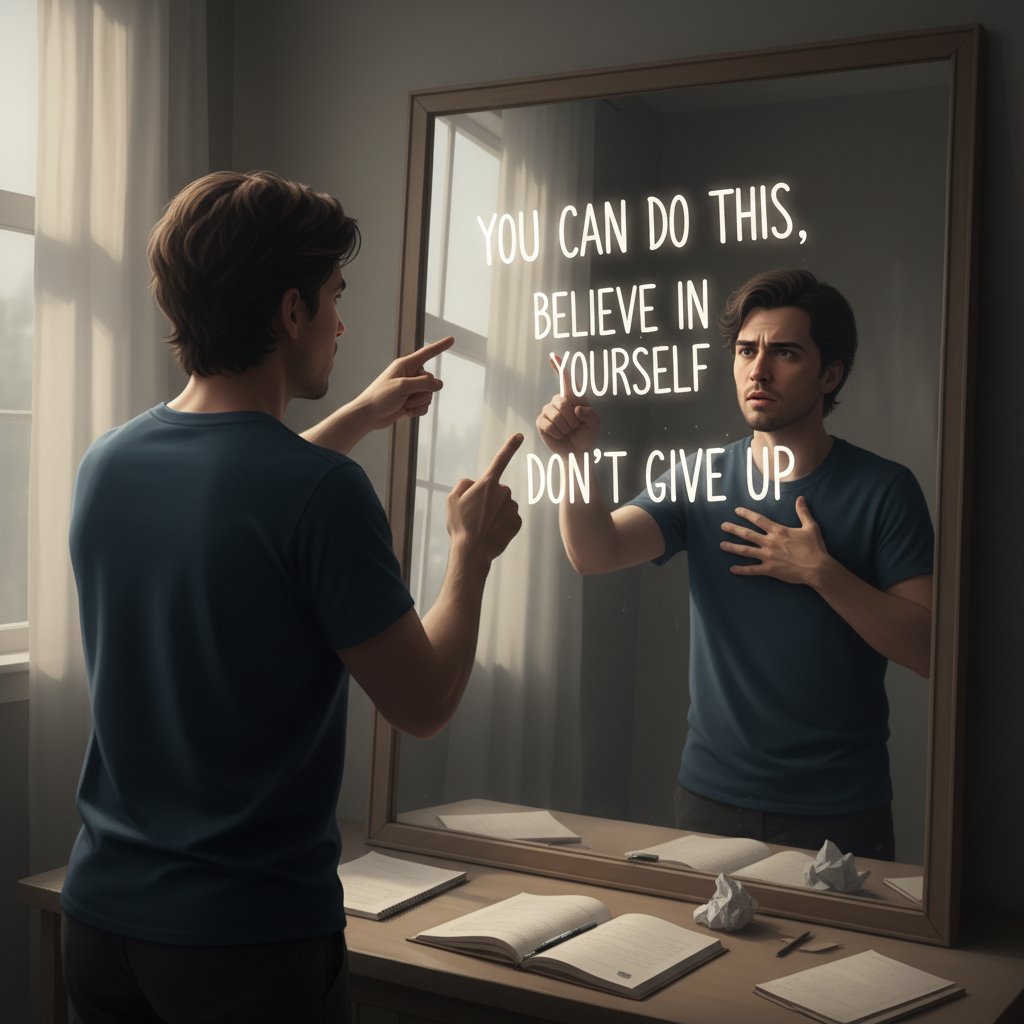
Recent evidence cited by Forbes Health, 2025 shows that 64% of women who clarify their needs report higher confidence, a shift that’s often rooted in intentional self-dialogue. It’s not about lying to yourself; it’s about making your inner voice an ally, not a critic.
Social feedback loops: why your circle shapes your confidence
Confidence isn’t built in a vacuum. The company you keep shapes the stories you tell about yourself. Supportive friends magnify your strengths; toxic circles amplify your doubts. Social reinforcement—validation, encouragement, honest feedback—is one of the most powerful predictors of sustainable dating confidence, as highlighted in eharmony’s 2025 report.
Curating your influences isn’t about ditching old friends, but about consciously choosing who gets a say in your dating narrative.
- Friends who challenge your negative self-talk without enabling it.
- Mentors who model healthy risk-taking.
- Communities (on or offline) where vulnerability is valued, not mocked.
- Romantic partners who respect your boundaries from day one.
- Group chats that celebrate micro-wins, not just “success stories.”
- Accountability buddies who help you set and keep intentions.
- Role models who show that confidence comes in many forms.
Your social circle can be the scaffolding that helps you grow—or the quicksand that keeps you stuck.
Modern dating apps: confidence killers or catalysts?
Swipe culture: how algorithms manipulate your self-worth
Dating apps promise endless possibility but are engineered for engagement, not closure. Features like super-likes, read receipts, and matches create a feedback cycle that doles out micro-validations and just as quickly snatches them away. The constant swiping can become an addiction to potential, not to connection.
| App feature | Psychological effect | Confidence impact |
|---|---|---|
| “Super like”/boosts | Dopamine rush, artificial scarcity | Temporary confidence spike, quick crash |
| Ghosting/left swipes | Social exclusion, uncertainty | Self-doubt, anxiety |
| Endless matches | Analysis paralysis, decision fatigue | Eroded decisiveness, overthinking |
| Profile metrics | Obsession over external validation | Confidence dependent on others |
Table 3: Dating app feedback cycles—win or lose
Source: Original analysis based on Lovie Awards, 2024, Bumble, 2025
Validation addiction isn’t an accident—it’s a business model. Recognizing the mechanics is your first step to opting out of the hamster wheel.
Reclaiming agency: setting boundaries with tech
You don’t have to surrender your self-worth to an algorithm. Here’s how to take control:
- Define your why: Know your intention before logging on.
- Set time limits: Don’t let apps hijack your day.
- Curate who you engage with: Swipe left on red flags, not just on looks.
- Mute unnecessary notifications: Take back your mental space.
- Celebrate conversations, not just matches: Value depth over volume.
- Log off after negative experiences: Don’t chase validation.
- Review your progress offline: Keep a journal—don’t let the app define your narrative.
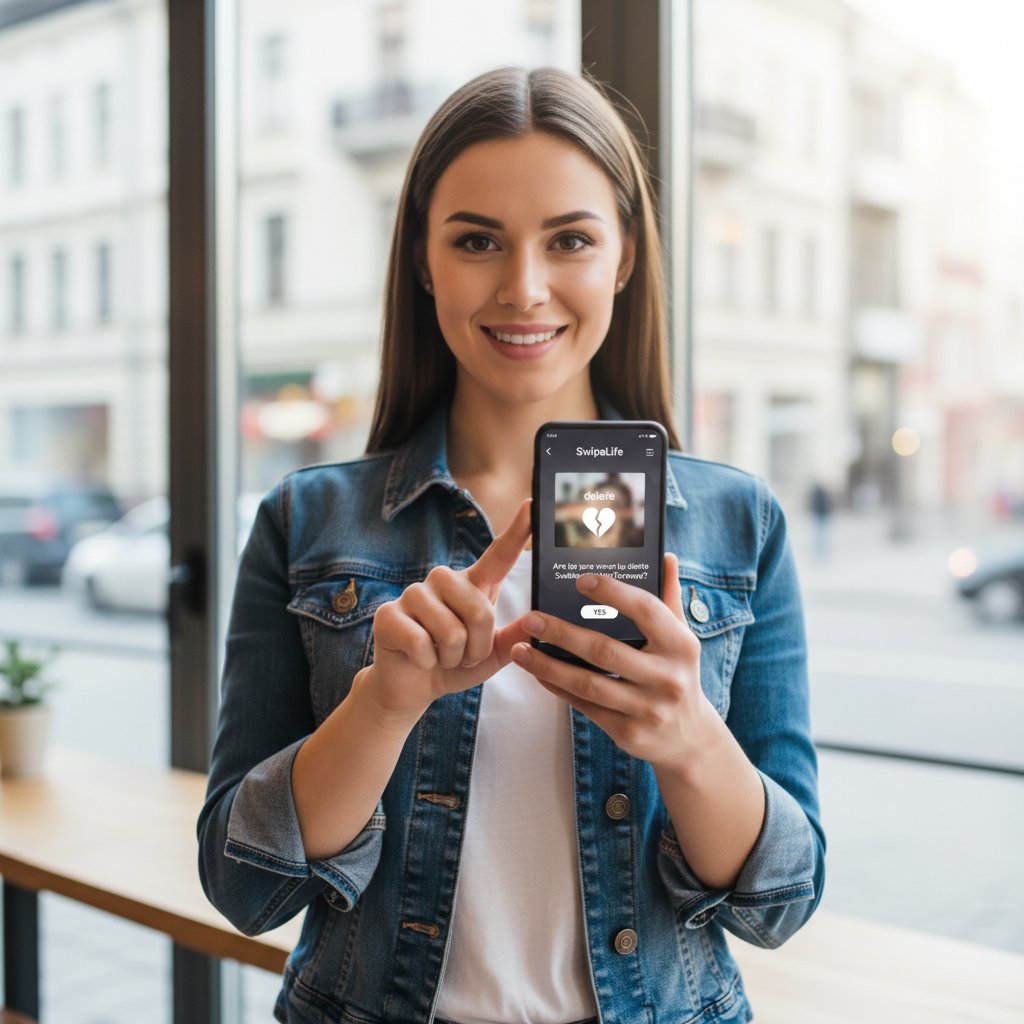
Agency is an act of rebellion in a system designed for passivity.
When AI meets dating: new tools for real self-assurance
AI-driven coaching, like what’s found at amante.ai, is reshaping the confidence landscape. Instead of generic advice, you get tailored prompts, empathetic feedback, and actionable strategies tuned to your unique quirks and goals. AI can be a mirror or a megaphone. Choose wisely.
"AI can be a mirror or a megaphone. Choose wisely." — Riley, technology ethicist
The catch? Tech is a tool, not a savior. Use it as a catalyst for genuine growth, not just another distraction.
Real stories: how people rebuilt their dating confidence
From ghosted to grounded: the journey of starting over
Case study time. Meet Jamie, 28, who went from being ghosted repeatedly to deliberately rebuilding dating confidence—one awkward coffee at a time. After a bruising breakup, Jamie started journaling every interaction, seeking feedback from trusted friends, and treating each date as an experiment in self-discovery, not validation.
The turning point wasn’t a “perfect” date but the realization that rejection is never the end of your story—it’s fuel for the next chapter.

Lessons from failure: why hitting rock bottom is underrated
Failure is a brutal but honest teacher. Those who hit rock bottom in dating—whether through heartbreak, humiliation, or chronic rejection—often emerge with a clarity that polite wins can’t deliver.
- Failure exposes your blind spots so you can fix them.
- It dismantles perfectionism, making room for authenticity.
- It teaches resilience, not just confidence.
- It fosters humility, a key to real connection.
- It filters out people who only value “success.”
- It gives you stories that build empathy, not just ego.
- It makes you a more compassionate dater.
Setbacks are not detours; they’re the curriculum for self-assurance.
The slow burn: building confidence through micro-wins
Micro-wins—tiny, daily victories—are the backbone of lasting self-assurance. Think: sending a risky message, asking a tough question, setting a boundary. Each win, however minor, rewires your sense of what’s possible.
- Smile at a stranger and hold eye contact for three seconds.
- Ask one open-ended question on a first date.
- Say “no” to a situation that doesn’t feel right.
- Share a vulnerability in conversation without apologizing.
- Compliment someone authentically, no strings attached.
- Update your profile with a truth you used to hide.
- Set (and keep) a boundary around texting frequency.
- Debrief a date—alone or with a friend—for learning, not self-critique.
- Celebrate a rejection as proof of your courage to show up.
- Take yourself out for a solo date and savor it.
Progress isn’t about perfection; it’s about momentum.
Actionable strategies: building unbreakable dating confidence
The self-assessment: where are you really starting from?
Before you can build self-confidence in dating, you need brutal honesty about where you’re starting. This isn’t about shame—it’s about clarity. Take stock of your current habits, beliefs, and triggers. Your audit might sting, but it’s the only way to target your growth.
Quick self-confidence audit for daters:
- Do I often compare myself to others on social media?
- Do I avoid putting myself out there for fear of rejection?
- Am I clear about my boundaries and needs?
- Do I seek validation externally more than internally?
- Can I name my top three strengths as a dater?
- Do I celebrate small wins, or only big milestones?
- Is my dating experience guided by curiosity or fear?
- Who in my life models the kind of confidence I want?
Use your answers as a map, not a verdict. Every weak spot is just a new starting line.
The confidence toolkit: skills nobody taught you
Dating confidence isn’t just a feeling—it’s a set of micro-skills you can learn and sharpen.
- Reading social cues without mind-reading.
- Asking for what you want, without apology.
- Listening to understand, not just to respond.
- Delivering honest feedback with kindness.
- Navigating awkward silences with curiosity.
- Self-soothing after setbacks, not spiraling.
- Setting and maintaining healthy boundaries.
- Owning your vulnerabilities as features, not bugs.
For each skill, practice in low-stakes settings: at work, with friends, even in solo reflection. Confidence is a muscle—use it or lose it.
When to ask for help (and who to trust)
Confidence-building is a solo journey—but not a solitary one. Sometimes, you need outside perspective. Know the difference between a mentor, coach, therapist, and AI assistant—and what each can (and can’t) offer.
Someone who’s walked the path ahead, sharing wisdom from lived experience.
A professional guide who offers feedback, accountability, and skill-building exercises.
A licensed mental health professional specializing in deeper patterns, trauma, or anxiety.
Tools like amante.ai, which offer personalized strategies and reflection prompts on your timeline.
Red flags in help-seeking? Anyone who promises quick fixes, demands money upfront without value, or tries to sell you on “secrets” rather than skills. Trust those who empower you to find your own answers.
Controversies and hard truths: what most experts won’t tell you
Why some people never gain confidence—no matter what they try
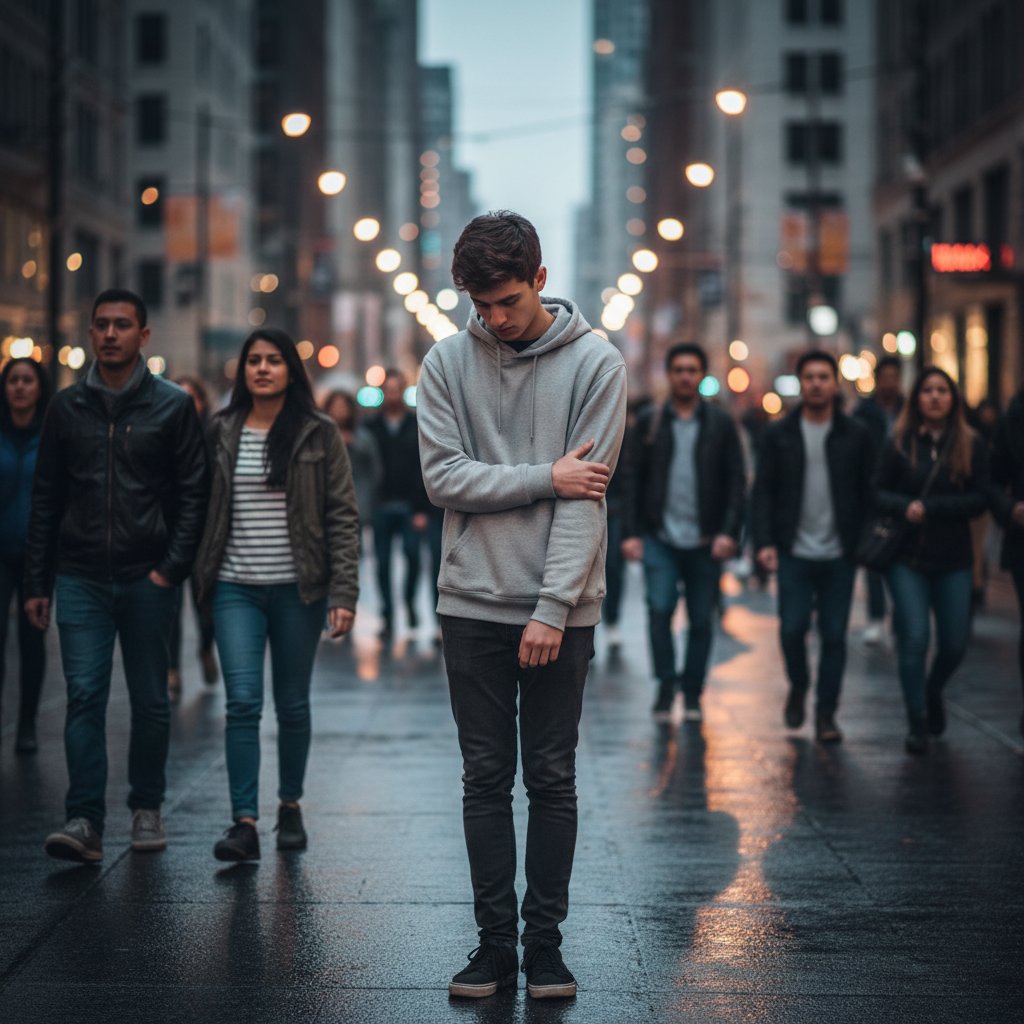
Here’s the taboo truth: not everyone gets a fair shot at dating self-confidence. Biological factors (like neurodiversity or trauma histories) and social realities (race, class, gender, ability) shape who feels “enough” in the dating world. Privilege lubricates confidence; lack of access or persistent microaggressions erode it. If confidence feels impossible, you’re not broken—the system is.
The dark side of dating confidence: manipulation and toxicity
When confidence is weaponized, it curdles into manipulation. Toxic tactics masquerade as “game” but leave emotional wreckage. Here’s how to spot the difference.
| Trait | Healthy version | Manipulative version | Warning signs |
|---|---|---|---|
| Assertiveness | Honest, respectful requests | Boundary-pushing, relentless pursuit | Ignores “no,” pressures responses |
| Charisma | Authentic, warm engagement | Love-bombing, emotional intensity spike | Swift escalation, hot/cold cycles |
| Vulnerability | Sharing at your own pace | Oversharing to guilt or control | TMI early, asks for secrets fast |
Table 4: Healthy confidence vs. toxic tactics
Source: Original analysis based on clinical best practices and Forbes Health, 2025
If you notice these red flags in yourself or others, hit pause. Confidence never comes at the cost of someone else’s safety.
Is confidence overrated? When vulnerability is your superpower
The cult of confidence is real—but it isn’t always the answer. Sometimes the bravest thing you can do is admit you’re scared, uncertain, or messy. Vulnerability isn’t a weakness; it’s the birthplace of connection.
"Sometimes the bravest move is admitting your fear." — Casey, real user testimonial
The goal isn’t impenetrable self-assurance but a flexible, honest relationship with yourself—one that leaves room for growth.
The future of dating confidence: trends, tech, and cultural shifts
How Gen Z and millennials are rewriting the rules
Today’s younger daters grew up online and aren’t buying the old scripts. According to Forbes, 2025, 48% now prefer budget-friendly dates, prioritizing comfort and connection over performance. New norms:
- Prioritizing self-care and mental health.
- Normalizing open conversations about boundaries and needs.
- Embracing non-traditional relationship structures.
- Valuing authenticity over curated perfection.
- Practicing intentional “datecations” (dating breaks for growth).
- Seeking partners with shared values, not just chemistry.
- Using tech for empowerment, not just entertainment.
Emerging trends point to a culture where confidence is defined by alignment, not applause.
AI and the rise of hyper-personalized confidence coaching
AI, especially platforms like amante.ai, is leading a shift toward hyper-personalized confidence coaching. The evolution is dramatic: from generic advice blogs to real-time, adaptive strategies, AI offers a mirror to your strengths and blind spots. Privacy and ethics remain hot topics—choose platforms that value transparency and security. By 2030, your AI coach may know you better than your best friend—but only if you let it. Use the tech, but don’t let it use you.
Cultural conversations: deconstructing gender, race, and confidence
Dating confidence isn’t one-size-fits-all. Intersectionality matters: a Black queer woman faces different pressures than a straight white man, and so do disabled daters or immigrants.
| Group | Unique pressure | Coping strategy | 2025 trends |
|---|---|---|---|
| Women | Safety, objectification | Boundary-setting, friend meetups | Assertive communication |
| LGBTQ+ | Discrimination, limited spaces | Niche apps, chosen family support | More inclusive platforms |
| People of color | Racialized fetishization | Community-led dating events | Diverse representation rising |
| Disabled daters | Accessibility barriers | Advocacy, self-advocacy | Greater app accessibility |
| Young professionals | Work-life imbalance | Intentional scheduling, self-care | Datecations, micro-dates |
Table 5: Confidence challenges across cultures
Source: Original analysis based on Bumble, 2025, Forbes Health, 2025
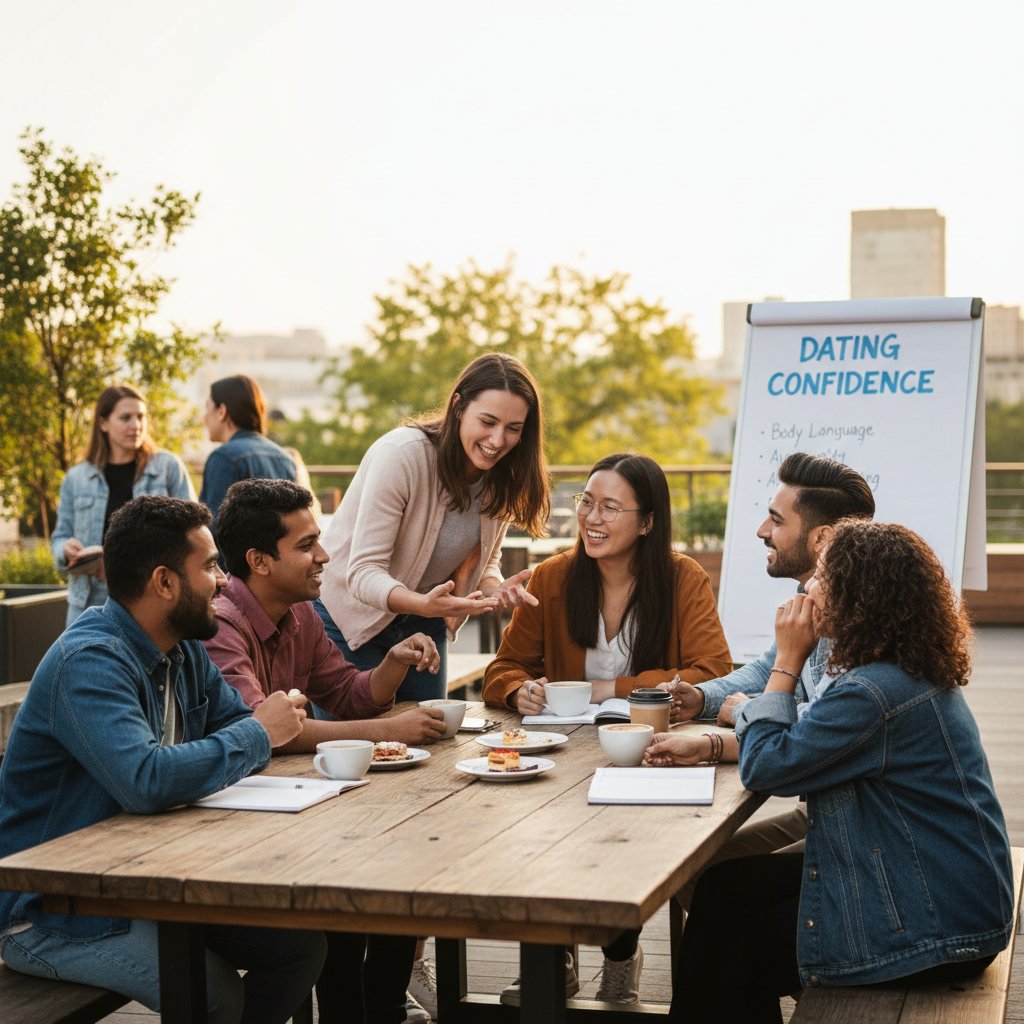
The more you understand these nuances, the better you can support yourself and others in the dating arena.
Your next move: building a dating confidence blueprint
Priority checklist: actionable steps for lasting change
Let’s distill it all. Here’s your no-nonsense, research-backed blueprint to build dating confidence—starting now.
- Audit your current confidence habits and beliefs.
- Set clear, meaningful dating intentions.
- Seek feedback from trusted sources—ditch echo chambers.
- Practice micro-wins daily (see earlier list).
- Curate your social media for empowerment, not comparison.
- Use apps intentionally, not compulsively.
- Celebrate small steps, not just big milestones.
- Learn to self-soothe after setbacks.
- Embrace vulnerability as a superpower.
- Ask for help when stuck—mentor, coach, therapist, or AI like amante.ai.
- Review and recalibrate your progress monthly.
Start with one step—build from there. Progress is the only metric that matters.
Resources and support: where to turn when you’re ready
You don’t have to do this alone. Whether you’re looking for community, literature, or tech tools, there’s a wealth of resources waiting.
- Community support groups (on and offline)
- Books: “Attached” by Amir Levine, “The Confidence Gap” by Russ Harris
- Digital coaching tools (amante.ai for bespoke advice)
- Podcasts on dating, relationships, and self-esteem
- Therapists with expertise in relationship anxiety
- Workshops on boundary-setting and communication
- Social media accounts that model authentic confidence
Continuous growth is the only real endgame. Keep seeking, keep questioning, keep building.
Final reflection: owning your story, rewriting your ending
Nobody hands you confidence—you forge it in the crucible of lived experience. The world profits when you doubt yourself, but liberation is yours for the taking. Challenge the narratives, chase the micro-wins, and above all, own your story. You’re the only one who can write your next chapter.

Share your journey with others—or keep it close. Either way, every step forward is an act of defiance against a world that wants you to play small. Your dating confidence isn’t just possible—it’s inevitable, if you’re willing to do the work.
Sources
References cited in this article
- Bumble 2025 Dating Trends(bumble.com)
- Jobera: Self-Confidence Statistics 2025(jobera.com)
- Forbes Health: Dating Statistics 2025(forbes.com)
- Lovie Awards: Relationship Statistics(lovieawards.eu)
- NPR: The Dating App Paradox(npr.org)
- FinancesOnline: Online Dating Statistics(financesonline.com)
- Forbes: Dating Scene Predictions(forbes.com)
- APA 2025 Work in America Survey(apa.org)
- VML: The Anxiety Economy Report(vml.com)
- Psychology Today: Science of Online Dating(psychologytoday.com)
- Forbes Health: State of Dating in America 2025(forbes.com)
- Reddit: Confidence vs Arrogance(reddit.com)
- CatholicMatch: Be Confident Without Being a Jerk(plus.catholicmatch.com)
- BetterUp: Confidence vs Arrogance(betterup.com)
- Medium: Why 'Just Be Yourself' May Be the Worst Dating Advice(medium.com)
- Reddit: AnxiousAttachment Discussions(reddit.com)
- Doctor NerdLove: Fake It 'Til You Make It(doctornerdlove.com)
- Hidden Gem: Importance of Self-Esteem(hiddengemprofiles.com)
- Statista: US Dating Service Users and Self-Esteem 2024(statista.com)
- BBC: Dating App Fatigue(bbc.com)
- News18: Study on Dating Apps and Self-Esteem(news18.com)
- Tinder: Year in Swipe 2024(sg.tinderpressroom.com)
- eNotAlone: Reclaiming Agency(enotalone.com)
- Tawkify: Reddit Dating Advice 2024(tawkify.com)
- NBC News: Overcoming Dating Hopelessness(nbcnews.com)
- Women Wanting Women: Hitting Rock Bottom(womenwantingwomen.com)
- BuzzFeed: Lessons Learned the Hard Way(buzzfeed.com)
- RightOnQ Coaching: Dating Strategies 2024(rightonqcoaching.com)
- DatingAdvice: Top Dating Experts 2023(datingadvice.com)
- FlirtToolkit: Confidence Building(flirttoolkit.com)
- GrowingSelf: Building Confidence in Dating(growingself.com)
- Good Men Project: Dating Trends 2024(goodmenproject.com)
- Hinge: Gen Z Dating Report 2024(hinge.co)
Transform Your Love Life
Amante.ai is your personal AI relationship expert, designed to help you build stronger, healthier, and more fulfilling relationships. Whether you're navigating the complexities of dating, improving communication with your partner, or seeking romantic guidance, Amante.ai provides customized, insightful advice tailored to your unique situation. With advanced natural language processing, it understands your concerns deeply, offering practical suggestions and emotional support when you need it most. Experience a revolutionary approach to love that combines empathy, intelligence, and convenience, empowering you to nurture genuine connections and lasting happiness.
Get startedReady to Transform Your Love Life?
Join thousands finding meaningful connections with AI guidance
Frequently Asked Questions
What is the 'anxiety economy' in dating?
The anxiety economy is a multibillion-dollar market that profits from dating insecurity by selling products and services like swipe boosts and confidence workshops. Rather than encouraging genuine growth, it monetizes the very doubts it claims to solve through mechanisms like endless notifications and algorithmic matches.
According to the article, what percentage of singles feel more confident when embracing their authentic selves?
According to Bumble's 2025 data cited in the article, 41% of singles feel more confident when they embrace their authentic selves.
How does mainstream media contribute to dating self-doubt?
Mainstream media from rom-coms to TV shows promotes an unattainable, heteronormative, and fantasy-based brand of dating confidence. Social media amplifies this by serving endless highlight reels and 'perfect' love stories, gaslighting people into unrealistic standards.
What is the main premise of improving dating confidence according to this article?
The article argues that improving dating confidence isn't about becoming someone you're not, but rather about resisting a system designed to keep you doubtful, reclaiming agency, and owning your authentic story.
Keep Reading
Keep exploring AI relationship coaching assistant

How Self-Esteem Shapes Dating Success

How to Feel Confident in Romantic Interactions in the Age of AI

Strategies to Boost Dating Confidence: What Research Supports

Relationship Self-Esteem Building Strategies for Modern Love

How Self-Esteem Shapes Relationship Success and Failure


